Study topic 4

Road markings, signals & traffic control

Understand centre lines, lane arrows, crossings, box junctions and traffic lights, and respond to authorised traffic personnel.

By the end, you should be able to

  • Know when a centre line may be crossed
  • Read signal colours and filter arrows correctly
  • Avoid entering a junction you cannot clear
01

Do not cross solid lines to overtake

Do not cross a single or double unbroken centre line to overtake. The Code permits crossing if a police officer, road traffic inspector or traffic warden orders it, or to avoid an obstruction. Take extreme care and give way to all other traffic.

Zambian Highway Code · Rule 143
02

A broken line can permit crossing

Where a broken centre line is beside a solid one, use the line nearest you. If yours is broken, you may overtake cautiously when the whole manoeuvre is safe and can finish before an unbroken line starts on your side.

Zambian Highway Code · Rule 144
03

Choose and change lanes carefully

Follow lane arrows at junctions. Before changing lanes, check mirrors and blind spots, signal and move only when clear. Do not force another driver or rider to swerve or slow.

Zambian Highway Code · Rules 148 and 152
04

Red and yellow mean stop

Stop behind the line for red. Yellow, also called amber, means stop too, unless it appears after you have crossed the stop line or you are too close to stop safely.

Zambian Highway Code · Rules 222 and 282; signal plates, printed pages 64 and 83
05

Go on green only when the way is clear

Green allows you to proceed only when the way is clear and there is room to clear the junction. Give way to pedestrians who are crossing when you turn.

Zambian Highway Code · Rule 222; signal plate, printed page 65
06

Follow the green filter arrow

A green arrow allows movement in the direction it shows, whatever the other lights show. Use the filter lane only if you intend to go that way, and give way to other traffic going in that direction.

Zambian Highway Code · Rule 223; signal plate, printed page 65
07

Keep the box clear

Enter a yellow box only when your exit road or lane is clear. The Code permits waiting to turn right if only oncoming traffic or other right-turning vehicles prevent the turn. At a signal-controlled junction, you must be able to cross the box completely without stopping.

Zambian Highway Code · Rule 220
08

Cancel your indicator after the manoeuvre

Signal clearly and in good time before changing course, stopping or moving off. Make sure your signal cannot mislead anyone, then check that the indicator is cancelled after the manoeuvre.

Zambian Highway Code · Rules 276 and 278
09

Traffic control and crossings

Obey authorised traffic personnel. If they hold straight-ahead traffic, wait for their instruction before turning left. At a crossing, let pedestrians already crossing finish even if vehicles receive a signal to move. At a pelican crossing, stop for red and give way to pedestrians for flashing amber.

Zambian Highway Code · Rules 202–204, 224 and 281; personnel signal plate, printed page 63

Key markings and traffic lights

These extracts from the Highway Code show the markings, lights and rules together. You can also see them after checking the relevant practice answers.

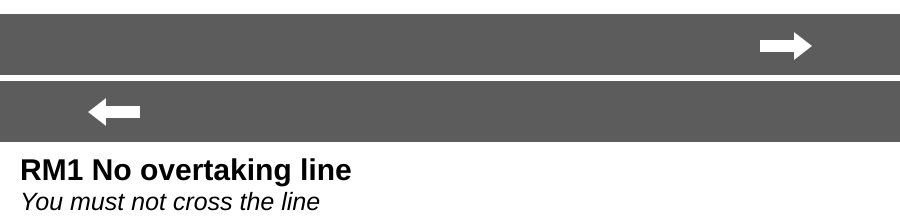
Unbroken no-overtaking line

An unbroken centre line that drivers must not cross simply to overtake.

Drawing after the Highway Code road-marking plate: an unbroken white centre line labelled RM1 No overtaking line
Reference shown: RM1 No Overtaking LineDrawn for this site after the Highway Code plate, printed page 82. Not AI-generated.

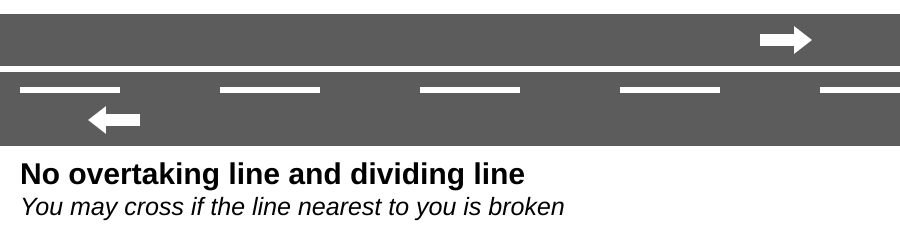
Broken line beside a solid line

A paired centre marking where the line nearest the driver is broken and the other line is solid.

Drawing after the Highway Code road-marking plate: a broken white line beside a solid white line
Reference shown: No Overtaking line and Dividing lineDrawn for this site after the Highway Code plate, printed page 82. Not AI-generated.

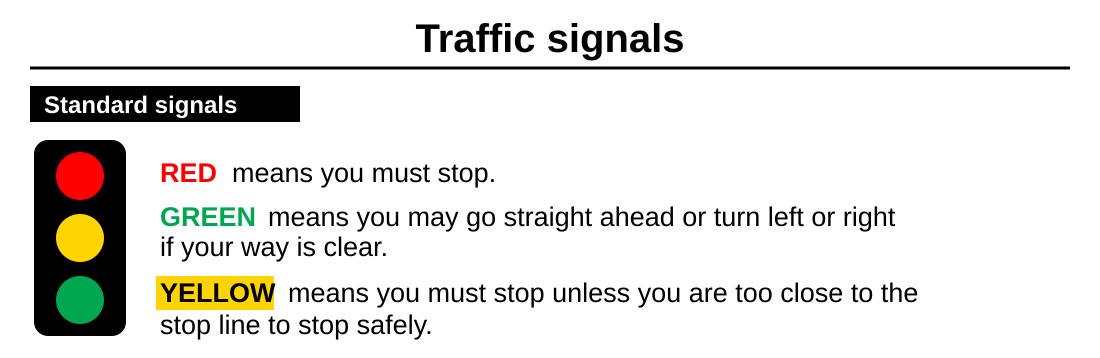
Standard traffic lights

The red, green and yellow traffic-light signals, drawn after the Highway Code plate.

Drawing after the Highway Code traffic-signal plate explaining red, green and yellow lights
Red
You must stop.
Green
You may go straight ahead or turn left or right if your way is clear.
Yellow
You must stop unless you are too close to the stop line to stop safely.
Reference shown: Standard traffic signalsDrawn for this site after the Highway Code plate, printed page 83. Not AI-generated.

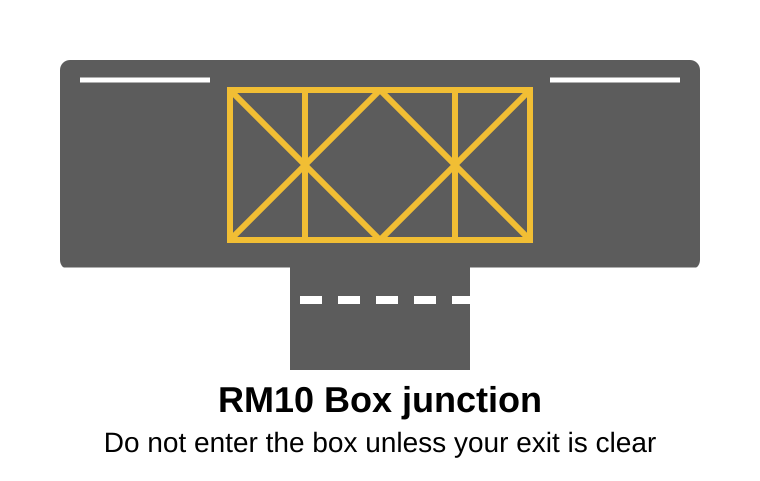
Yellow box junction

A yellow box marking that must be kept clear unless the Highway Code exception for turning right applies.

Drawing after the Highway Code road-marking plate: a yellow RM10 box junction
Reference shown: RM10 Box JunctionDrawn for this site after the Highway Code plate, printed page 83. Not AI-generated.

Topic check

Answer 7 questions on markings & signals

Every answer includes an explanation and a Highway Code rule reference.

Practise this topic
Next study topicTopic 5 — Speed, braking & following distance